Before you ever drew breath, death was at work, shaping you.
The universe is a web of relationships in a process of becoming. And in this process, life and death are not opposites. Death is not simply something that happens when life fails; the disturbing reality is that at a biological level, death is one of the mechanisms through which life becomes possible.
I came to know death through the stories I grew up with. Invariably in those stories death was an intruder, an enemy, evidence of a world gone wrong. But however comforting those stories might have been, I have come to see that they were not true. I suspect that, like me, many of you have been misled by cultural and religious norms when it comes to thinking about death. It was not a failing on our part. We could not have believed otherwise. Remember, thinking is not a neutral activity. Like everything else about us, our thinking patterns are modelled. Albert Bandura’s work on social learning indicates how profoundly our behaviours and expectations are shaped by observing others. Along with our language, cultural norms, values and behavioural patterns, we acquire our thinking from those around us, who model to us not only how to think but also what is thinkable. And those models have misshaped the way we understand death.
Much of the theology that I have encountered in my life has taught that death is an unnatural intruder into God’s perfect creation. It is a familiar story: God’s creation was perfect, then humanity sinned and death entered the world as a consequence. Death was evidence of the world’s fall from its intended state.
Now I am not accusing anybody of deliberate misrepresentation. Nor am I suggesting that if our theology is wrong then God is not real. I am simply pointing out that this theology (this way of thinking about God) needs to be revised because it is not grounded in physical and biological reality. Death is not a failure of the process of life. It is not a bug in the system, but an essential feature of it.
Only weeks after your conception, your hands began to emerge from your torso as featureless paddles of tissue. But rather than fingers growing as extensions from these, instead your body initiated a process called apoptosis, or programmed cell death. The cells in the spaces between the fingers began to self-destruct. They shrank and fragmented. Other cells called macrophages swallowed the remains, leaving only the delicate architecture of your fingers. Death is not an intruder. It is a sculptor.
Our bodies are not static. They are made of atoms that are constantly being replaced. You have a new stomach lining every few days, a new skeleton every decade. The “you” that exists may be a continuous pattern, but the stuff you are made of is constantly being born and dying. The persistence of the whole pattern sometimes requires the dissolution of its parts. And the whole pattern itself is only temporary.
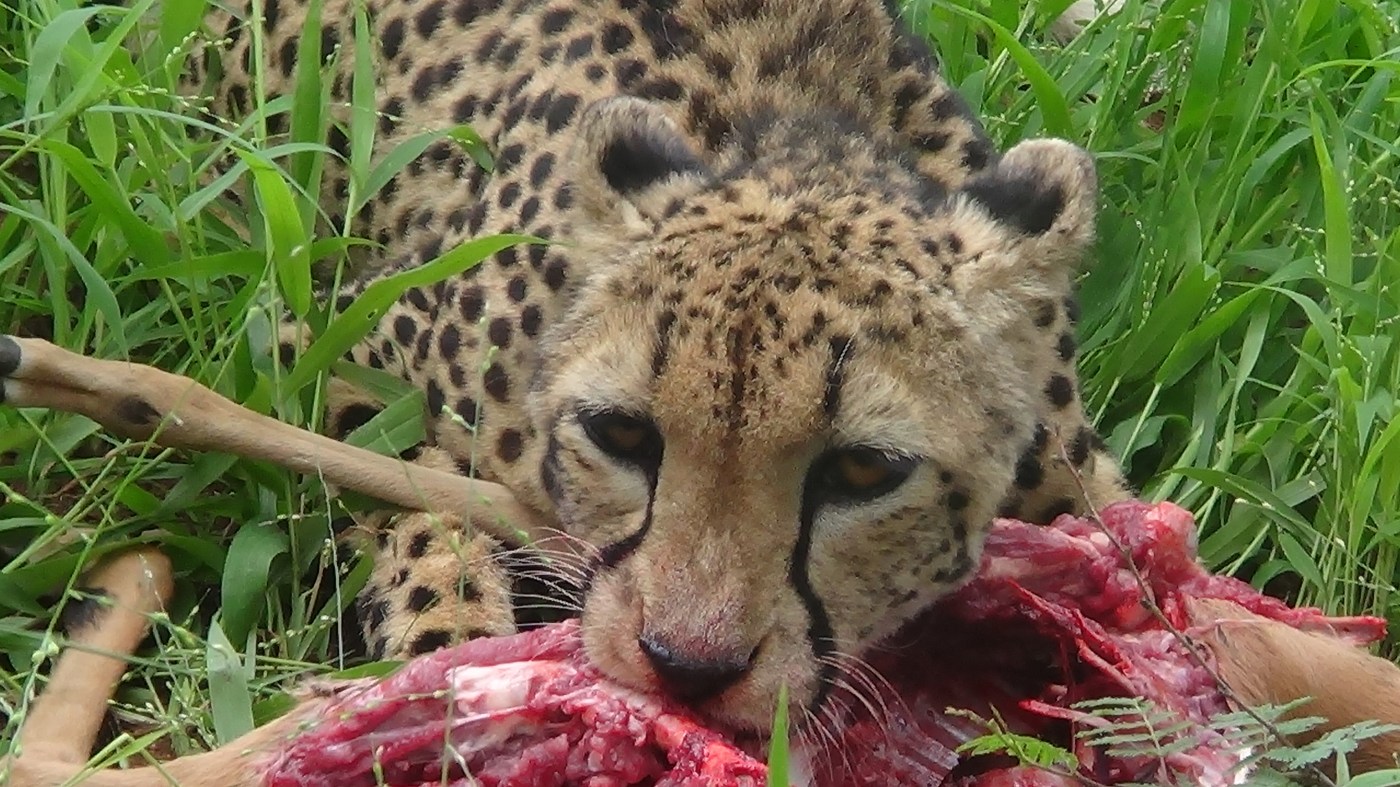
All individual lifeforms are holons nested within larger, constantly evolving systems, where older generations must fade to make way for new ones. Death is the engine that drives this adaptation. Like my dad, I love the African bush. And if I think about the myriad species that comprise that ecosystem, every one of them is adapted to either hunt more efficiently or to avoid being hunted. If the predator numbers fall, the whole ecosystem risks being overrun by burgeoning herbivore numbers. My son loves snakes and frequently needs to remind many people who – out of fear – would kill them, that if there were no snakes there would be more rats, more disease. Predation has a place. We need things to die if the system is to live. We evolve because we die, not despite of it.
On a psychological level, too, death drives life and growth. I am forty-eleven now and certainly not the same person I was in my twenties. And thank goodness for that. The certainties that I carried in my twenties about God, about the afterlife, about the neatness of the world, had to make way before I could learn to live comfortably with the questions I carry now. The young man who thought he had everything figured out had to become untenable before an older, more honest version could emerge. There is no growth if nothing dies. There is no life.
But necessary does not mean good. Natural does not mean desirable. I know this because I have scattered my father’s ashes. I have seen the coffins of too many infant children lowered into the earth. I have felt the absurdity of answering emails when the extraordinary figure of my father is simply gone. The fact that death is integral to the process of life does not make the loss of my father any less devastating. The fact that the health of any ecosystem depends on predation does not make the suffering of the prey morally irrelevant. And certainly nothing about apoptosis justifies the death of a two-year-old child. I do not want to turn the necessity of death into a justification for it. But its structural necessity to the process of life raises some very uncomfortable theological questions.
So here is fragment number two. If death is a fundamental part of the process of life then what are we to make of a God who is Love? What does it imply about the Logos through whom all things were made? If Jesus is the pattern, the structuring principle of reality, as the writer of the fourth gospel claims, then we cannot simply imagine that death is an aberration that God intends to erase. Because death is not an anomaly that appears at the margins of reality; it appears to be woven into the very fabric of becoming itself.
How might a Logos woven into a cosmos of death justify naming itself Love?


What happened to the interesting AI post? I can’t find it now!
LikeLike